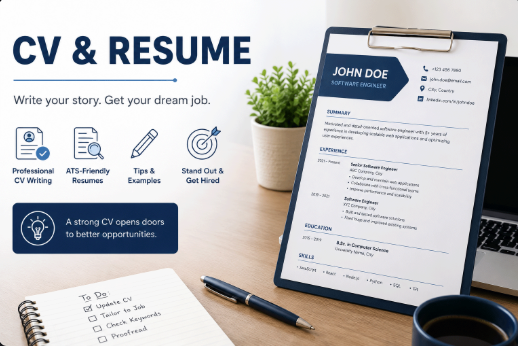

Resume keywords are the words employers use to describe the role. They can include job titles, tools, methods, certifications, soft skills, and industry terms.
Find repeated terms
Read several similar job posts and mark repeated skills. If many postings mention reporting, CRM, Laravel, bookkeeping, or stakeholder communication, those terms may matter.
Use only truthful matches
Do not add keywords you cannot explain. If a recruiter asks about a tool, you should be able to describe your level clearly.
Place keywords naturally
Use keywords in the summary, skills section, and experience bullets. A natural sentence is stronger than a long list of disconnected words.
Review before applying
Compare the final resume with the target job description. Missing important accurate terms can reduce visibility, while keyword stuffing can make the CV look weak.
Step-by-step workflow before applying
Before sending a resume, cover letter, or job application message, treat the content as a complete review workflow. The goal is a document that is clear, accurate, privacy-safe, and aligned with the role.
- Read the job description and mark three to five skills you truly have.
- Adjust the summary and skills for the role without changing the facts.
- Compare dates and titles across your resume and professional profiles.
- Remove personal data that employers do not need at the first stage.
- Save a separate copy for each application so you know what was sent.
Detailed quality checklist
Strong career content is not only a design problem. Every section should help the reader understand the candidate value faster and with less uncertainty.
- Use clear verbs such as organized, improved, supported, analyzed, delivered, and coordinated.
- Connect responsibilities to outcomes, processes, tools, or teams when possible.
- Place tools and technologies in context instead of relying on a long unexplained list.
- Keep the tone professional and consistent across English, Arabic, or Turkish versions.
- Reread the content to catch repeated, heavy, or vague sentences.
Common mistakes to avoid
Many weak applications fail because they are generic, overloaded with keywords, or too casual with private information. A careful final review protects both credibility and privacy.
- Do not use real personal data in SEO examples or public sample articles.
- Do not repeat the same paragraph unchanged across the resume, cover letter, and email.
- Do not hide important skills inside images only.
- Do not exaggerate language, tool, or technology levels.
- Do not send files with unprofessional names or old drafts by mistake.
How Profile Echo helps
Profile Echo helps organize profile and resume information in a reusable structure. You can create one strong base, then adapt it for each opportunity while keeping the career story consistent.
- Collect career details once and update them when they change.
- Use free resume content as a structured starting point.
- Review role keywords before exporting or sharing the final version.
- Use fictional examples while learning, then replace them with accurate details.
Final review before sharing
Before sharing a resume, article, or profile link, spend a few minutes on the final review. This improves how the content appears in Google, social previews, and employer-facing pages.
- Confirm that the title and description describe the page clearly.
- Open the link on mobile and desktop to check text and image previews.
- Make sure public images do not contain private information.
- Test the language, links, and dates before publishing.